
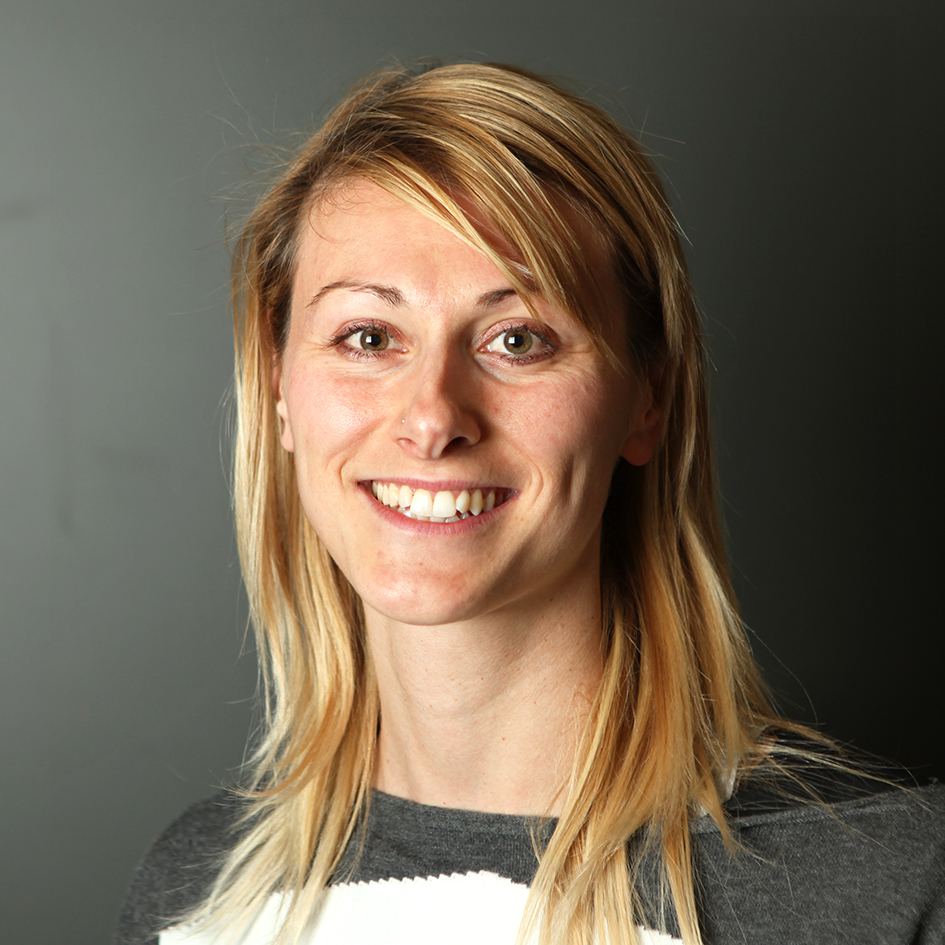
Elisa Donati
Elisa Donati received her B.Sc. and M.Sc. degrees in Biomedical Engineering from the University of Pisa and her Ph.D. in Biorobotics from the Sant’Anna School of Advanced Studies. She is currently an Adjunct Professor at the Institute of Neuroinformatics (INI), University of Zurich and ETH Zurich, where she leads the Neuromorphic Closed-loop Systems research group. She is also affiliated with the Neuroscience Center Zurich. Her research lies at the intersection of neuroscience, neuromorphic engineering, and biomedical technologies, with a focus on closed-loop neural interfaces, neuromorphic sensing and processing, and spiking neural networks for real-time sensory encoding and biomedical signal analysis. Her work aims to develop adaptive and energy-efficient neuro-inspired systems for next-generation biomedical and neuroprosthetic applications.
Elisa is involved in several international and national research initiatives funded by organizations including the Royal Society (UK), the Swiss National Science Foundation (SNSF), and NATO.
Abstract: Neuromorphic devices are transforming healthcare by enabling innovative, low-power, and efficient solutions for biomedical applications. Inspired by the neural architecture and computational principles of the human brain, these systems are particularly suited for wearable and implantable technologies capable of real-time, closed-loop interaction with biological tissue while operating directly at the edge. In this talk, I will introduce the key features of neuromorphic circuits for healthcare applications, highlighting how they enable energy-efficient edge computing for continuous sensing, adaptive processing, and autonomous decision-making. I will present examples of neural computational primitives for biomedical signal processing and discuss their integration into closed-loop systems combining artificial and biological intelligence.
By leveraging neuromorphic sensing, spiking neural networks, and edge AI, we can develop next-generation healthcare technologies, from wearable monitoring platforms to implantable neuroprosthetic devices, that improve patient care, support personalized medicine, and revolutionize chronic disease management.