Ryad Benosman
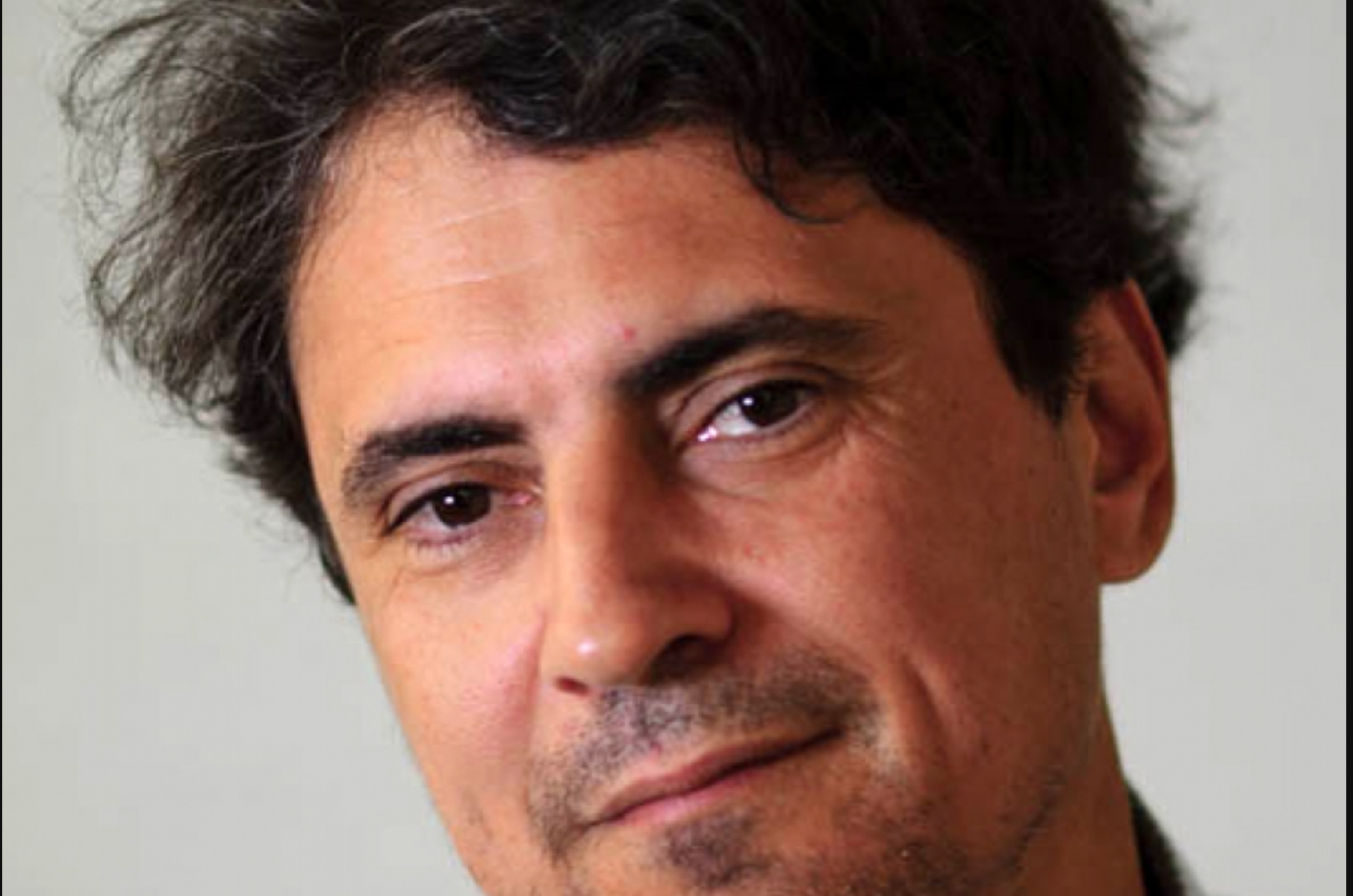
Ryad Benosman is a French scientist and researcher working at the intersection of artificial intelligence, computational neuroscience, computer vision, and neuromorphic engineering. He is internationally recognized for his pioneering contributions to event-based vision, a bio-inspired computational paradigm that departs from conventional frame-based imaging by encoding visual information asynchronously, in direct analogy with the dynamics of biological retinas. His work has played a significant role in shaping the theoretical and algorithmic foundations of event-driven perception systems, now a central topic in neuromorphic sensing and intelligent robotics.
He has a background in pure mathematics, with formal training in mathematical foundations, which has strongly influenced his approach to modelling, abstraction, and the design of computational systems in perception and artificial intelligence.
His research also extends to biologically inspired vision restoration systems, including computational models and hardware–algorithm co-design for retinal prostheses and optogenetic stimulation frameworks. This work focuses on bridging neural computation, sensory encoding, and clinical translation in visual neuroprosthetics. He has contributed to research and development efforts in optogenetic vision restoration at GenSight Biologics, including work spanning system architecture, computational modeling, and translational studies documented in associated scientific publications and preclinical research. He is also a co-founder of Pixium Vision, a company developing advanced retinal implant and vision restoration technologies.
In addition to his academic contributions, he has held senior research leadership positions in industry, including at Meta (formerly Facebook), where he contributed to advanced research in machine perception and artificial intelligence. He is the co-founder of Prophesee, a leading company in event-based vision sensors, and has been involved in Grey Matter Labs, focusing on neuromorphic computation and brain-inspired AI architectures, as well as other ventures in computational sensing and intelligent hardware systems. More recently, he has also co-founded TempoSense, a company working on next-generation event-based sensing and compute systems.
Earlier in his career, following his doctoral studies, he contributed to foundational work in omnidirectional and panoramic vision systems, advancing early approaches to wide-field visual sensing for robotics and autonomous perception.
His research spans neuroscience, robotics, artificial intelligence, and neuromorphic hardware and chip design, with a consistent focus on biologically inspired approaches to perception and intelligent systems. When not working on redefining machine perception, he is usually focused on pushing the boundaries of how machines understand and interpret the world.
Abstract: Architectures, Challenges, and Towards Unified Frame–Event Representations
This talk focuses on event-based computing and the broader need to extend current computing architectures toward a new paradigm shift. This shift requires a rethinking of the entire event sensing and processing stack, from sensor design to algorithms and system-level integration.
Recent results in event-based sensing are presented, along with an overview of the key challenges involved in making these systems widely usable and capable of complementing, and in some cases replacing, conventional frame-based cameras.
A unified approach for jointly leveraging frames and events is introduced, enabling more robust and efficient perception systems. The main technical and scientific challenges required to reach this goal are also discussed, including sensor design, multimodal data fusion strategies, algorithmic frameworks, and supporting computational architectures.
Finally, the talk outlines the components that still need to be developed across the full event sensing stack in order to enable scalable, real-world deployment of this paradigm.