
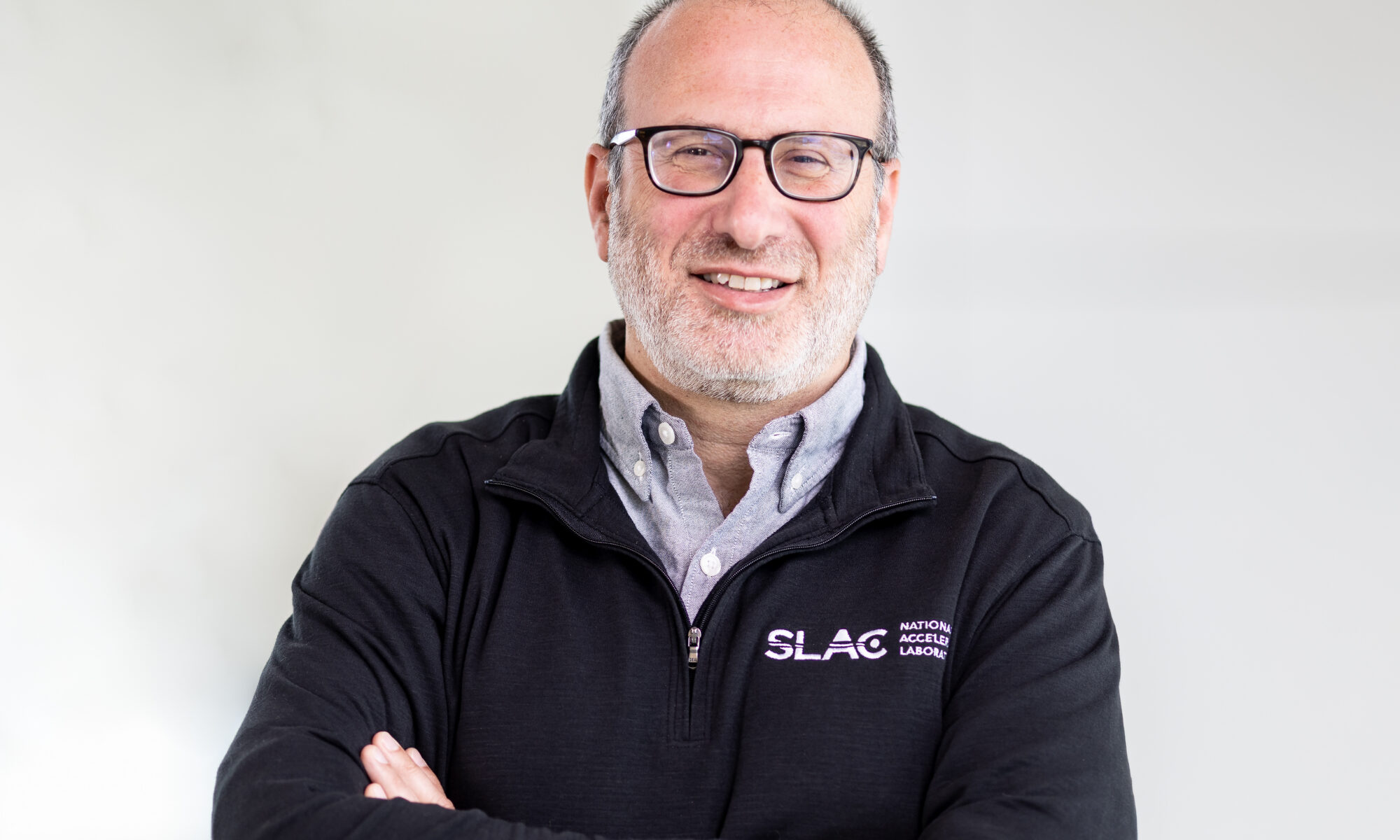
Alberto Sallelo
Bio: Alberto Salleo is the Hong Seh and Vivian W. M. Lim Professor in the School of Engineering. He currently serves as the Deputy Director for Science and Technology at SLAC National Accelerator Laboratory.
Salleo earned a Laurea in Chemistry from the University of Rome La Sapienza and an MS and PhD in Materials Science from UC Berkeley. He was a post-doc and then a staff scientist at Xerox PARC from 2001 until 2005. Salleo joined Stanford as an Assistant Professor in 2006. He rose through the ranks and was eventually promoted to Full Professor in 2019. He served as Chair of the Materials Science Department between 2019 and 2025. Alberto won an NSF Career Award as well as the SPIE Early Career Award and the Gores Award for Teaching, Stanford’s highest teaching honor. He has been a Clarivate Highly Cited Researcher in Materials Science since 2015. Alberto is a Knight of the Italian Republic, a Fellow of the Materials Research Society, the European Academy of Sciences, the National Academy of Inventors and the AAAS, as well as a member of Academia Europaea.
Integration Strategies for Organic Neuromorphic Devices
Polymer-based ECRAMs have been recently developed to the point of demonstrating outstanding performance at the device level. Indeed, all solid-state ECRAMs switch with frequencies exceeding 50MHz even when moderately scaled, they use less than 100fJ per switching event and can be switched billions of times at temperatures up to 90°C. Furthermore, with a judicious choice of materials, the read current can be as low as a few nAs, as needed for scaling. The next development step involves the fabrication and testing of arrays of ECRAMs for hardware accelerators. This involves thinking about access devices and array design. I will present our progress in fabricating and testing oxide-based transistors as access devices. Oxides are attractive because of their record-low off currents, which are advantageous for state retention. We have devised a fabrication process that allows to monolithically integrate oxide electronics with polymer-based ECRAMs thus enabling hybrid systems. Addressing ECRAMs is inherently more complex than resistive-RAM devices because they are 3-terminal devices. I will show that they can be operated in a 2-terminal configuration, with advantages in term of array size, energy efficiency and speed.